
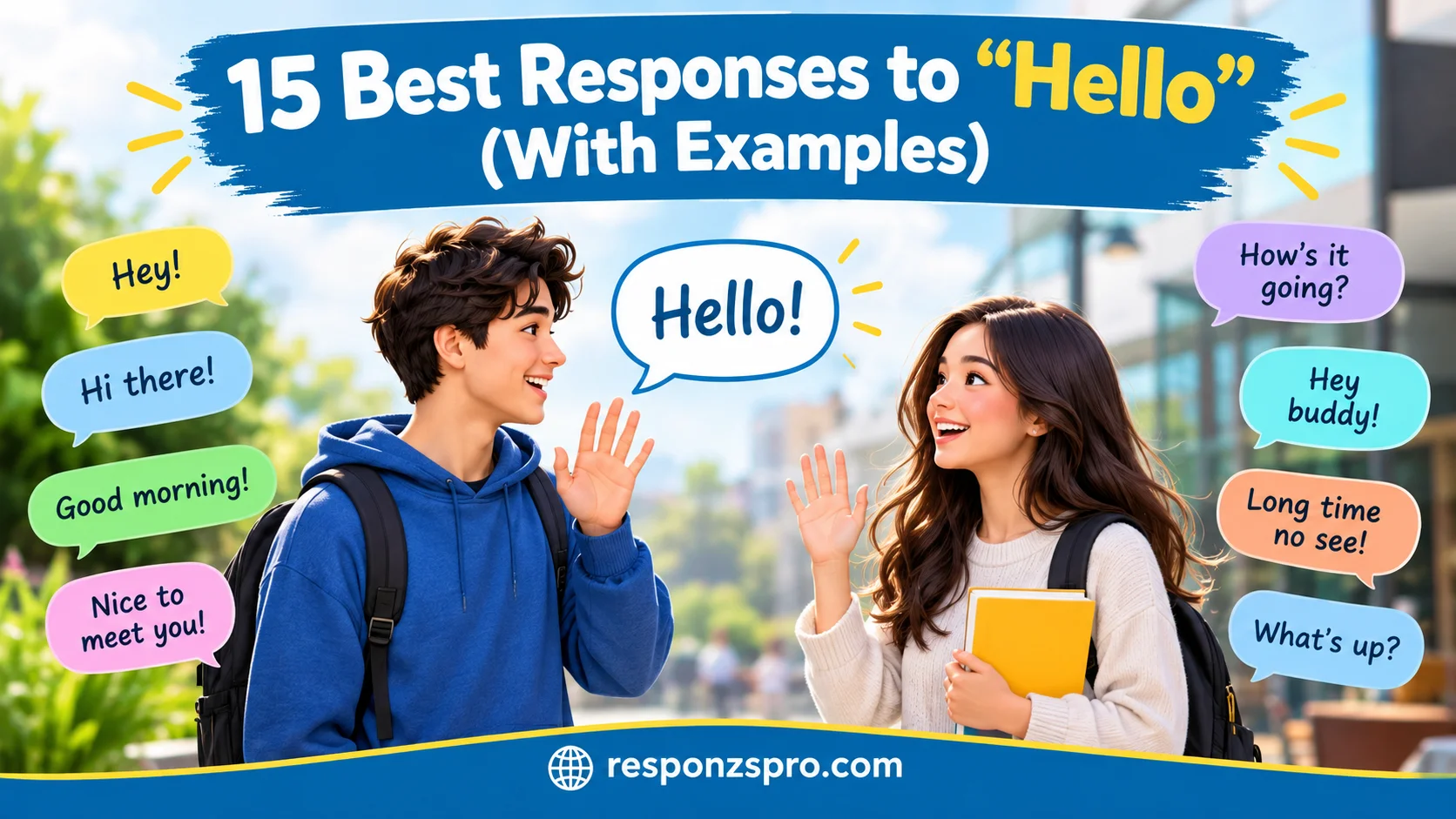
Finding the Best Responses to “Hello” (With Examples) can make everyday conversations easier and more natural. Whether you are replying to a friend, stranger, coworker, or crush, the right response helps you sound confident, friendly, funny, flirty, or professional. A simple “Hello” can start almost any conversation, but knowing what to say next can sometimes feel difficult.
In this guide, you’ll discover polite replies to hello, casual greetings, funny responses, flirty answers, and professional alternatives for different situations. Each response can help you continue the conversation without sounding awkward or repetitive. Whether you are replying through text, social media, in person, or email, choosing the right tone and words can create a positive impression and make the interaction more comfortable and engaging.
1. Hi! How Are You?
“Hi! How are you?” is one of the best responses to “Hello” when you want to make a conversation feel friendly and natural. Imagine a friend messaging you after a busy week. Instead of replying with only “Hi,” you can ask how they’re doing. This small addition shows interest and gives the other person an easy way to continue the conversation. It also works when greeting classmates, coworkers, neighbors, or someone you’ve recently met. For example, if a colleague says hello before a meeting, this response sounds polite without being too formal. You don’t need to make the greeting complicated. A warm question is often enough to turn a simple exchange into a meaningful conversation.
Meaning
It means you’re greeting the person and asking about their well-being. It communicates friendliness and interest.
Tone
The tone is warm, polite, and conversational. It suits both casual and moderately professional situations.
Best Use
Use this response with friends, family members, classmates, coworkers, and acquaintances.
When to Use This Response
Choose it when you want to encourage the other person to share how they’re feeling or what they’ve been doing.
More Example Replies
- “Hi! How’s your day going?”
- “Hey! How have you been lately?”
- “Hello! Everything going well?”
Similar Responses
- “Hey, how are you doing?” — Casual and friendly.
- “Hi! What’s new?” — Encourages an update.
- “Hello! How’s everything?” — Warm and general.
2. Hey! What’s Up?
“Hey! What’s up?” is an excellent reply when someone greets you casually through a text, social media message, or everyday conversation. Suppose your friend sends you “Hello” while you’re relaxing at home. You can respond with this phrase to keep the exchange easygoing. It doesn’t require a long answer, and the other person can mention anything from their plans to an interesting event. This greeting is especially useful when you want to sound approachable rather than formal. However, it may not be the best choice for a serious business email or a conversation with someone who expects formal language. Pay attention to the relationship and setting before choosing this relaxed response.
Meaning
It means “Hi, what are you doing?” or “What’s happening?” It’s an informal way to continue a conversation.
Tone
The tone is casual, relaxed, and friendly. It often sounds natural between people who know each other.
Best Use
Use it with friends, siblings, classmates, and familiar online contacts.
When to Use This Response
Choose this reply when you want to invite a casual chat without asking a personal or complicated question.
More Example Replies
- “Hey! What’s going on?”
- “Hi! What are you up to?”
- “Hey there! Anything interesting happening?”
Similar Responses
- “What’s happening?” — Casual and direct.
- “What are you up to?” — Asks about current activities.
- “How’s it going?” — Focuses more on general well-being.
3. Hello! Nice to Hear From You
When someone you haven’t spoken to for a while sends “Hello,” replying with “Hello! Nice to hear from you” can make the exchange feel welcoming. Perhaps an old school friend messages you unexpectedly, or a former colleague gets in touch after several months. This response acknowledges their effort and shows that you’re happy to reconnect. It also leaves room for the conversation to develop naturally. You might follow it with a question about their life or mention something you remember about them. The phrase works best when you genuinely appreciate the contact. If you don’t know the person well, a simpler “Hello! How are you?” may sound more natural.
Meaning
It means you’re pleased that the person has contacted you. It communicates appreciation and openness to reconnecting.
Tone
The tone is warm, sincere, and welcoming. It can sound slightly more personal than a basic greeting.
Best Use
Use it with old friends, former coworkers, relatives, or acquaintances you haven’t heard from recently.
When to Use This Response
Choose it when the greeting feels like an opportunity to renew a connection or catch up.
More Example Replies
- “Hey! It’s lovely to hear from you.”
- “Hello! What a nice surprise.”
- “Hi! I’m glad you reached out.”
Similar Responses
- “Great to hear from you!” — Enthusiastic and friendly.
- “It’s been a while!” — Highlights the time apart.
- “I’m happy you messaged.” — More personal and direct.
4. Hi There! How’s Your Day Going?
If you want to respond to “Hello” with something more engaging, try “Hi there! How’s your day going?” This greeting works particularly well during daytime conversations, whether you’re messaging a friend or speaking with a colleague. For example, someone might say hello while you’re waiting for a class to begin. Asking about their day gives them a comfortable topic to discuss. It also allows the conversation to develop beyond a simple exchange of greetings. You can adapt the question to suit the moment, such as asking about someone’s morning or evening. The key is to sound genuinely interested rather than asking automatically. A friendly greeting followed by a thoughtful question can make an ordinary interaction feel more personal.
Meaning
It means you’re saying hello and inviting the other person to talk about their day.
Tone
The tone is friendly, attentive, and approachable. It shows interest without becoming too personal.
Best Use
Use it with friends, classmates, coworkers, neighbors, or people you meet during the day.
When to Use This Response
Choose it when you want an easy conversation starter that gives the other person a specific topic to discuss.
More Example Replies
- “Hi there! How’s your morning been?”
- “Hey! Is your day going well?”
- “Hello! How has today treated you?”
Similar Responses
- “How’s your day been?” — Suitable later in the day.
- “How’s your morning going?” — Best earlier in the day.
- “Hope you’re having a good day!” — More of a friendly wish.
5. Hello! It’s Great to Meet You
When a new person introduces themselves with “Hello,” a response such as “Hello! It’s great to meet you” can create a positive first impression. Imagine attending a networking event, joining a new class, or meeting a friend’s family for the first time. A welcoming reply helps reduce the awkwardness that sometimes comes with introductions. It also shows that you’re comfortable engaging with someone new. If the setting is professional, you can add your name or ask about the person’s role. In a casual environment, a smile and a relaxed delivery will make the phrase feel natural. If you’ve already met the person before, however, “Nice to see you again” would be more appropriate.
Meaning
It means you’re pleased to meet someone, especially when you’re being introduced for the first time.
Tone
The tone is polite, welcoming, and respectful. It can sound professional or friendly depending on your delivery.
Best Use
Use it during introductions, networking events, interviews, social gatherings, or first meetings.
When to Use This Response
Choose it when you want to welcome someone and establish a positive connection.
More Example Replies
- “Hello! I’m glad we finally get to meet.”
- “Hi! It’s a pleasure to meet you.”
- “Hello! I’ve heard good things about you.”
Similar Responses
- “Nice to meet you!” — Simple and widely appropriate.
- “Pleased to meet you.” — Slightly more formal.
- “Great to finally meet you.” — Useful after hearing about someone beforehand.
6. Hey! Long Time No See
“Hey! Long time no see” is a natural response when someone you haven’t encountered for a long time greets you. Perhaps a former classmate sends you a message, or you run into an old neighbor at a shopping center. Instead of treating the greeting like an ordinary exchange, this phrase acknowledges your shared history. It can open the door to stories, memories, and updates about what’s changed. You might follow it with a question about their work, family, or recent experiences. Use the expression when you’ve genuinely been apart for a while. If you see the person every day, it may sound confusing or sarcastic unless you’re deliberately joking.
Meaning
It means you haven’t seen or spoken to the person for some time, and you’re acknowledging the reunion.
Tone
The tone is casual, cheerful, and familiar. It often communicates pleasant surprise.
Best Use
Use it with old friends, former classmates, distant relatives, and previous coworkers.
When to Use This Response
Choose it when reconnecting with someone after a noticeable gap in communication.
More Example Replies
- “Hey! It’s been ages!”
- “Hello! Where have you been hiding?”
- “Wow, it’s been a while! How are you?”
Similar Responses
- “It’s been so long!” — Warm and straightforward.
- “Look who’s here!” — Playful and informal.
- “What have you been up to?” — Encourages an update.
7. Hello! How Can I Help You?
When someone says “Hello” in a work-related conversation, “Hello! How can I help you?” can be an effective response. Imagine you’re answering a customer inquiry, responding to a professional email, or welcoming someone to a business meeting. This phrase acknowledges the greeting and quickly establishes the purpose of the conversation. It communicates that you’re available and ready to assist. However, the wording should match the situation. With a customer, it sounds service-oriented and respectful. With a close friend, it may seem unusually formal or suggest that you expect a request. In a professional setting, you can also use the person’s name if you know it and if doing so feels appropriate.
Meaning
It means you’re greeting the person and inviting them to explain what they need.
Tone
The tone is professional, courteous, and helpful. It emphasizes readiness to assist.
Best Use
Use it in customer service, workplace conversations, business chats, and formal inquiries.
When to Use This Response
Choose it when the other person may need information, assistance, or a professional response.
More Example Replies
- “Hello! What can I do for you today?”
- “Good morning! How may I assist you?”
- “Hi! Please let me know how I can help.”
Similar Responses
- “How may I assist you?” — More formal.
- “What can I do for you?” — Direct and helpful.
- “How can I be of service?” — Formal and service-oriented.
8. Hey! It’s So Good to See You
If someone greets you in person, “Hey! It’s so good to see you” can communicate genuine happiness. Imagine meeting a friend at a family gathering after several busy months. A simple hello may be enough, but adding that you’re happy to see them makes the interaction warmer. You can use the phrase with relatives, friends, supportive coworkers, or anyone whose company you appreciate. It works particularly well when your words match your expression and body language. If you’re replying to a text rather than meeting someone face-to-face, “It’s so good to hear from you” may be more accurate. Choosing the right wording makes your greeting feel sincere instead of rehearsed.
Meaning
It means you’re happy to see the person and appreciate the opportunity to connect.
Tone
The tone is warm, affectionate, and enthusiastic. It conveys more emotion than a neutral greeting.
Best Use
Use it during reunions, family gatherings, social events, and friendly workplace encounters.
When to Use This Response
Choose it when seeing the person genuinely makes you happy or when you want to make them feel welcome.
More Example Replies
- “Hey! I’m really glad you’re here.”
- “Hello! It’s wonderful to see you again.”
- “Hi! What a lovely surprise seeing you here!”
Similar Responses
- “So nice to see you!” — Short and warm.
- “I’m glad you’re here!” — Emphasizes their presence.
- “It’s wonderful seeing you again!” — Ideal for reunions.
Read This: 15 Best Responses to “Grand Rising” (With Examples)
9. Hey You! What’s New?
“Hey you! What’s new?” is a playful way to respond to “Hello” when you already share a comfortable relationship with the other person. For example, a close friend might message you after work, and you want to make the conversation feel lively rather than predictable. This response invites them to share recent news, funny stories, or changes in their life. The words “Hey you!” can also add a little personality to the greeting. However, your relationship matters. It may sound affectionate with a close friend but overly familiar with a new acquaintance or manager. If you’re unsure whether the phrase fits, choose “Hey! What’s new?” instead. It keeps the same relaxed feeling with less familiarity.
Meaning
It means you’re greeting someone informally and asking whether anything interesting has happened recently.
Tone
The tone is playful, relaxed, and familiar. Depending on the relationship, it can also sound affectionate.
Best Use
Use it with close friends, siblings, partners, or people you regularly chat with.
When to Use This Response
Choose it when you want to invite updates while keeping the conversation light and engaging.
More Example Replies
- “Hey you! Tell me something exciting.”
- “Hi! Got any interesting news?”
- “Hey! What’s been happening lately?”
Similar Responses
- “What’s new with you?” — Friendly and direct.
- “Anything exciting lately?” — Focuses on interesting updates.
- “Hey, stranger!” — Playful when someone has been absent.
10. Hello! Hope You’re Doing Well
“Hello! Hope you’re doing well” is a thoughtful response when you want to sound polite without asking the other person to share personal details. Suppose a former colleague contacts you about a project, or an acquaintance sends a greeting after several weeks. This phrase welcomes the person while keeping the interaction comfortable. It also works in professional emails and messages where you want to acknowledge someone courteously before discussing the main subject. Unlike “What’s up?” it doesn’t require an immediate explanation of what the person is doing. You can use it with people you know well or those you only know through work. For a closer relationship, consider adding a personal question to make the greeting more engaging.
Meaning
It means you’re greeting the person and expressing the hope that things are going well for them.
Tone
The tone is polite, considerate, and respectful. It suits both personal and professional communication.
Best Use
Use it in emails, professional messages, conversations with acquaintances, and friendly check-ins.
When to Use This Response
Choose it when you want to express goodwill without making the conversation too personal.
More Example Replies
- “Hello! I hope everything is going smoothly.”
- “Hi! Hope you’ve been keeping well.”
- “Hey! I hope life’s treating you kindly.”
Similar Responses
- “Hope all is well!” — Concise and professional.
- “I hope you’re having a good week.” — Time-specific and friendly.
- “How have you been?” — Invites a more personal answer.
11. Hey! You Just Made Me Smile
When someone you like sends “Hello,” you might want a response that feels a little more personal. “Hey! You just made me smile” communicates that their message has brightened your mood. Imagine receiving a greeting from someone you’ve been hoping to hear from. Instead of responding with a plain hello, you can let them know their message was a pleasant surprise. This phrase may suit a romantic interest, a close friend, or someone who regularly makes you feel appreciated. Still, consider your relationship before using it. With a person you barely know, it could sound unexpectedly intimate. If you already share warmth and affection, however, it can be a sweet way to continue the conversation.
Meaning
It means the person’s greeting made you feel happy or improved your mood.
Tone
The tone is affectionate, sincere, and slightly flirty when used in a romantic context.
Best Use
Use it with a romantic interest, a partner, or a close friend with whom you share an affectionate bond.
When to Use This Response
Choose it when you genuinely feel pleased to hear from the person and want to communicate that feeling.
More Example Replies
- “Hey! Your message came at the perfect time.”
- “Hi! It’s always nice hearing from you.”
- “Well, that was a lovely notification to receive!”
Similar Responses
- “You made my day!” — More enthusiastic.
- “I was happy to see your message.” — Sincere and direct.
- “What a lovely surprise!” — Warm without being strongly romantic.
12. Hey! I Was Just Thinking About You
“Hey! I was just thinking about you” can make a greeting feel especially meaningful when the other person has been on your mind. Imagine that you’re remembering a funny conversation with a friend when their message appears. You can respond with this phrase to create a natural connection between your thoughts and their arrival. It can also work in a romantic conversation when you want to express affection without making a dramatic declaration. The most important thing is honesty. Use it when you really have been thinking about them, rather than treating it as a line you should send to everyone. A genuine message often feels more comfortable and memorable than an exaggerated compliment.
Meaning
It means the person was already in your thoughts before they contacted you.
Tone
The tone is warm, personal, and affectionate. In a romantic exchange, it may sound gently flirty.
Best Use
Use it with close friends, partners, or someone with whom you have an established personal connection.
When to Use This Response
Choose it when the statement is true and you want the person to feel remembered or appreciated.
More Example Replies
- “Hey! I was actually going to message you.”
- “Hi! You crossed my mind earlier today.”
- “What a coincidence! I was remembering our last conversation.”
Similar Responses
- “I was about to text you!” — Emphasizes timing.
- “You’ve been on my mind.” — More emotional.
- “I was wondering how you were doing.” — Caring and less romantic.
13. Hey! What’s the Good News?
“Hey! What’s the good news?” is an upbeat response that can turn an ordinary greeting into a lively conversation. Imagine a friend messages you after a long day, and you want to encourage them to share something positive. This phrase invites them to tell you about a recent achievement, an exciting plan, or a small moment that made them happy. It works particularly well with people who enjoy cheerful conversations and playful questions. However, not everyone who says hello has good news to share. If the person seems upset or is contacting you about something serious, a more neutral question such as “What’s going on?” may be kinder. Let their mood guide your response.
Meaning
It means you’re greeting the person and inviting them to share positive news or something exciting.
Tone
The tone is optimistic, energetic, and playful. It sets a positive mood for the conversation.
Best Use
Use it with friends, family members, teammates, or people who enjoy upbeat exchanges.
When to Use This Response
Choose it when the situation feels cheerful and you want to encourage an interesting update.
More Example Replies
- “Hey! Anything exciting to share?”
- “Hi! Tell me something good.”
- “Hello! What’s been making you happy lately?”
Similar Responses
- “Any good news?” — Short and direct.
- “What’s the exciting update?” — Focuses on recent developments.
- “What’s the highlight of your day?” — Encourages a more reflective answer.
14. Hello! It’s a Pleasure to Hear From You
“Hello! It’s a pleasure to hear from you” is a polished response for situations where you want to sound respectful and welcoming. It may suit a message from a client, a professional contact, a former supervisor, or an acquaintance you appreciate. For instance, if a business contact opens a conversation with “Hello,” this reply acknowledges their greeting without becoming overly casual. It can also work in a personal conversation when you want to express genuine appreciation. The phrase is more formal than “Great to hear from you,” so consider your usual communication style before choosing it. In a relaxed chat with a close friend, it might sound stiff. In a professional exchange, it can communicate courtesy and confidence.
Meaning
It means you’re pleased that the person has contacted you and are happy to continue the conversation.
Tone
The tone is courteous, professional, and appreciative. It expresses warmth while maintaining a respectful distance.
Best Use
Use it in business correspondence, professional conversations, formal messages, and respectful exchanges.
When to Use This Response
Choose it when you want to acknowledge someone’s message with warmth while keeping your language polished.
More Example Replies
- “Hello! I’m pleased to hear from you.”
- “Hi! Thank you for getting in touch.”
- “Hello! It’s lovely to receive your message.”
Similar Responses
- “Good to hear from you.” — Professional and concise.
- “Thank you for reaching out.” — Particularly useful in business messages.
- “It’s a pleasure connecting with you.” — Suitable for professional introductions.
15. Hey! Tell Me Something Interesting
If you want a conversation to feel lively from the beginning, “Hey! Tell me something interesting” can be a fun response to “Hello.” Imagine chatting with a close friend who enjoys sharing unusual facts, funny stories, or unexpected experiences. Rather than asking the usual questions about their day, you give them an open invitation to surprise you. This can make the exchange feel spontaneous and help prevent the conversation from becoming repetitive. The phrase works best when both people are comfortable joking around or sharing stories. With a stranger or someone in a formal setting, it may sound demanding. A softer version, such as “Got anything interesting to share?” can make the same invitation feel more relaxed.
Meaning
It means you’re inviting the other person to share an interesting story, fact, experience, or piece of news.
Tone
The tone is curious, playful, and conversational. It encourages creativity and a lively exchange.
Best Use
Use it with close friends, siblings, partners, or familiar online contacts who enjoy informal chats.
When to Use This Response
Choose it when you want to move beyond basic greetings and give the conversation an entertaining direction.
More Example Replies
- “Hey! Surprise me with a fun fact.”
- “Hi! What’s the most interesting thing that happened today?”
- “Hello! Got a good story for me?”
Similar Responses
- “Tell me something new.” — Invites an update.
- “What’s the most exciting thing lately?” — Encourages a personal story.
- “Got any fun facts?” — Best for lighthearted conversations.
FAQs:
1. What is the best response to “Hello”?
The best response depends on the situation and your relationship with the person. You can simply say “Hi!”, “Hello, how are you?”, or choose a more friendly, funny, or flirty reply.
2. How do I reply to “Hello” from a stranger?
A polite and simple response works best. You can say “Hello! How can I help you?”, “Hi, nice to meet you,” or “Hello, how are you?” depending on the context.
3. What is a funny response to “Hello”?
For a casual conversation, try something playful like “Well, hello there!”, “Look who finally showed up!”, or “Hello! What brings you here?” Make sure the humor matches the person and situation.
4. How do I respond to “Hello” from my crush?
If you want to sound slightly flirty, you can reply with “Hey, I was hoping I’d hear from you!”, “Well, hello, you!”, or “Hey! How’s your day going?” Keep it natural rather than overly direct.
5. How should I respond to “Hello” professionally?
Keep your reply polite, clear, and respectful. You can use “Hello, it’s nice to hear from you,” “Hello, how may I assist you?”, or “Hi, I hope you’re doing well.”
Conclusion:
Knowing the right way to respond to “Hello” can make conversations feel easier and more natural. Whether you need a polite, casual, funny, flirty, or professional response, the best choice depends on the person and situation. With the examples in this guide, you can confidently reply to “Hello” and keep the conversation moving without sounding awkward or repetitive.

Maya Rose is an English-language writer passionate about storytelling, personal growth, and everyday life. Her writing combines simplicity, warmth, and thoughtful perspectives that connect with readers.
1 thought on “15 Best Responses to “Hello” (With Examples)”