
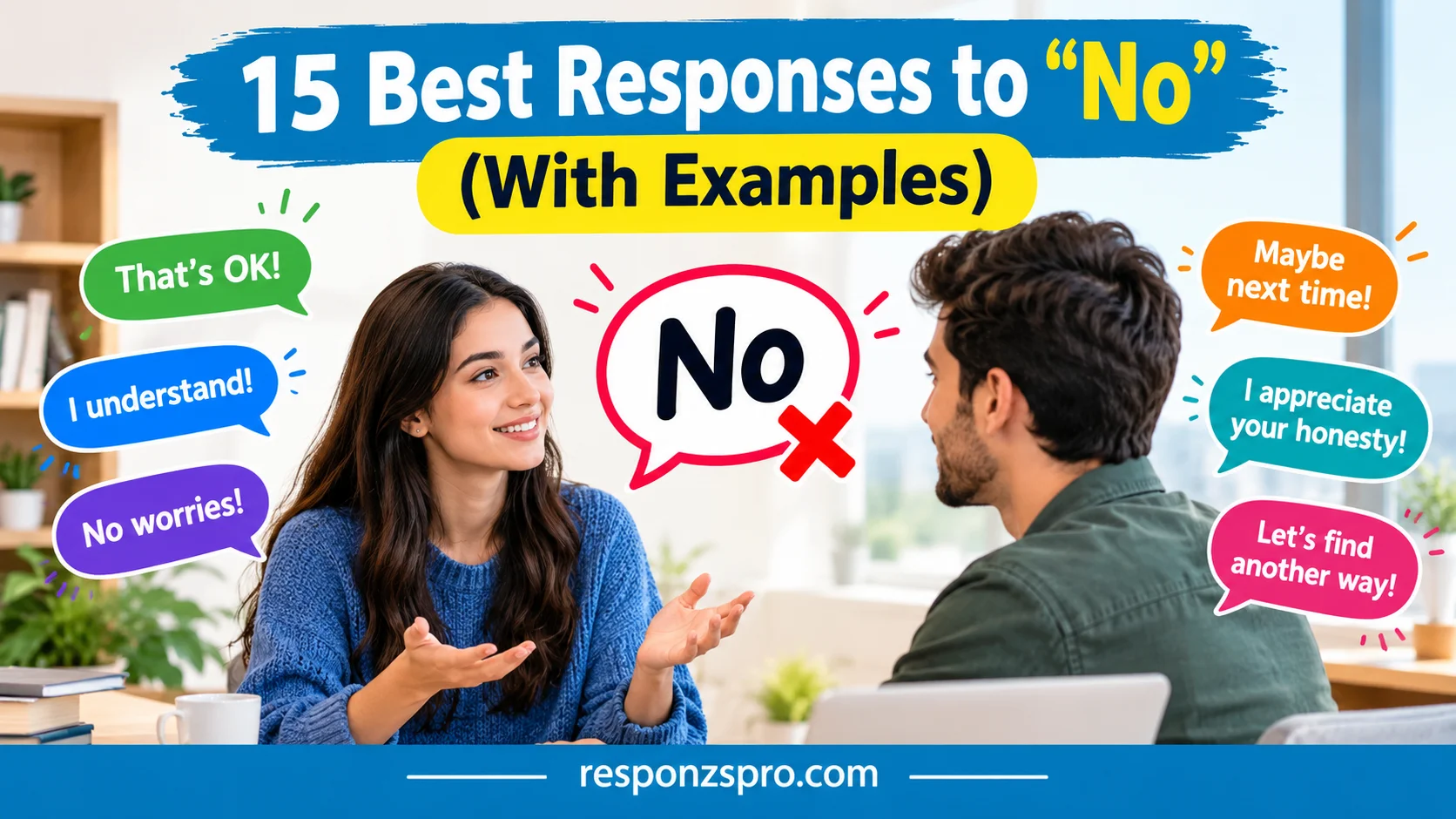
Have you ever struggled to respond when someone says no, or found it difficult to say no yourself? Best Responses to “No” (With Examples) can help you handle these situations with confidence, kindness, and the right words. Whether you’re dealing with friends, family, coworkers, or everyday requests, knowing how to respond makes conversations easier. Sometimes, a simple reply can prevent misunderstandings, reduce awkwardness, and help you express your feelings without sounding rude, angry, or overly emotional.
Saying no is a normal part of communication, but it can sometimes feel uncomfortable because of people-pleasing, fear of rejection, or social pressure. You don’t have to agree to everything to keep others happy. Learning to set healthy boundaries, respect your own time, and communicate calmly is an important life skill. In this guide, you’ll discover polite, funny, confident, clever, and firm responses to no that you can use in different situations without unnecessary stress or conflict.
1. No Worries!
Sometimes, the simplest response is the most effective. “No worries!” is a friendly way to respond when someone declines your request, invitation, or suggestion. Imagine asking a friend to join you for coffee, but they explain that they are busy. Instead of making them feel guilty, you can simply say, “No worries! Maybe another time.” This response shows that you understand their situation and are not upset about their decision. It works particularly well in casual conversations because it keeps the interaction relaxed. Whether you’re texting a friend, speaking with a family member, or communicating with a colleague, this phrase helps you respond positively without making the situation uncomfortable.
Meaning
“No worries!” means it’s completely okay and there is no problem with the other person’s decision.
Tone
Friendly, relaxed, understanding, and positive. It makes the other person feel comfortable.
Best Use
Use it when someone declines an invitation, request, favor, or casual suggestion.
When to Use This Response
Choose this response when you want to show that you respect someone’s decision and do not expect an explanation.
More Example Replies
- “No worries! We can try another day.”
- “That’s totally fine. Take care!”
- “No worries at all. Thanks for letting me know!”
Similar Responses
- “That’s okay!”
- “It’s all good!”
- “No problem!”
2. That’s Totally Fine!
“That’s totally fine!” is an excellent response when you want to accept someone’s negative answer without creating unnecessary tension. For example, suppose you invite a coworker to lunch, but they explain that they have already made other plans. You can respond, “That’s totally fine! Maybe we can go next week.” This phrase communicates understanding while keeping the conversation pleasant. It is slightly more reassuring than a simple “Okay” because it makes clear that you are not offended. It also works well in friendships, family conversations, and professional interactions. When someone says no, responding this way shows emotional maturity and helps maintain a positive relationship without pressuring them to change their answer.
Meaning
It means you accept the person’s decision and do not have a problem with it.
Tone
Polite, warm, reassuring, and respectful.
Best Use
Use it when someone declines an invitation, changes plans, or cannot help with something.
When to Use This Response
Choose this phrase when you want to make the other person feel comfortable about saying no.
More Example Replies
- “That’s totally fine! I understand.”
- “It’s fine, maybe we can plan something later.”
- “That’s perfectly okay. Thanks for telling me.”
Similar Responses
- “That’s absolutely okay!”
- “I completely understand!”
- “It’s perfectly fine!”
3. I Understand!
“I understand!” is a thoughtful response when someone says no and provides a reason for their decision. It shows that you are listening rather than arguing or trying to convince them. For instance, imagine asking a friend to attend your birthday dinner, but they explain that they have a family commitment. You could reply, “I understand! Family comes first. Hopefully, we can catch up soon.” This response is particularly useful when the other person has a genuine reason for declining. It communicates consideration without making the conversation overly emotional. In professional situations, it can also help you acknowledge a colleague’s limitations or a manager’s decision while maintaining a respectful and cooperative attitude.
Meaning
“I understand!” means I recognize and accept your reason or decision.
Tone
Empathetic, mature, calm, and respectful.
Best Use
Use it when someone explains why they cannot accept your request or invitation.
When to Use This Response
Choose this response when you want to acknowledge someone’s circumstances without challenging their decision.
More Example Replies
- “I understand! Maybe another time.”
- “I understand your situation. Thanks for explaining.”
- “That’s understandable. Don’t worry about it.”
Similar Responses
- “I get it!”
- “That makes sense!”
- “I see where you’re coming from.”
4. Maybe Next Time!
“Maybe next time!” is a cheerful response when someone turns down an invitation but you would still like to spend time with them in the future. Imagine inviting your best friend to watch a movie, but they have an important assignment to finish. Rather than sounding disappointed, you can say, “Maybe next time! Good luck with your assignment.” This response leaves the door open for another opportunity without making the other person feel pressured. It is especially useful when declining an invitation does not mean someone is uninterested in the relationship. You can use it with friends, relatives, classmates, and coworkers to keep future plans possible while accepting the current answer gracefully.
Meaning
“Maybe next time!” means another opportunity might be possible in the future.
Tone
Hopeful, friendly, casual, and positive.
Best Use
Use it when someone declines a social invitation or cannot participate in an activity.
When to Use This Response
Choose this phrase when you genuinely want to suggest meeting or making plans another day.
More Example Replies
- “Maybe next weekend, then!”
- “No problem! We’ll plan something another time.”
- “Hopefully, we can make it happen next time.”
Similar Responses
- “Another time, perhaps!”
- “Let’s try again soon!”
- “Hopefully next time!”
5. Thanks for Letting Me Know!
When someone gives you a negative answer, acknowledging their honesty can be a mature way to handle the situation. “Thanks for letting me know!” is particularly useful when you need a clear answer to make other arrangements. For example, suppose you ask a colleague whether they can cover your shift, but they explain that they are unavailable. You can respond, “Thanks for letting me know! I’ll see if someone else is available.” This phrase keeps communication professional and straightforward. It also shows that you appreciate receiving an honest answer instead of being left waiting. Whether you are discussing personal plans, work responsibilities, or everyday requests, it helps you move forward without unnecessary frustration.
Meaning
It means you appreciate the other person communicating their decision clearly.
Tone
Polite, professional, appreciative, and composed.
Best Use
Use it when someone responds to a request, invitation, work-related question, or scheduling arrangement.
When to Use This Response
Choose it when receiving a clear answer helps you decide what to do next.
More Example Replies
- “Thanks for letting me know. I’ll make other arrangements.”
- “I appreciate the quick response!”
- “Thanks for being honest with me.”
Similar Responses
- “I appreciate you telling me!”
- “Thanks for the update!”
- “Got it, thanks!”
6. I Appreciate Your Honesty!
Honesty is important in every relationship, even when the answer is not what you hoped to hear. “I appreciate your honesty!” is a meaningful response when someone directly tells you no instead of making excuses or giving false promises. For example, if you ask someone whether they would like to go on a date and they politely explain that they are not interested, you can respond, “I appreciate your honesty. Thanks for being straightforward with me.” This answer demonstrates confidence and emotional maturity. It is particularly valuable in romantic conversations, friendships, and situations where clear communication matters. It allows you to accept rejection without making the other person feel uncomfortable or responsible for your disappointment.
Meaning
It means you value the person’s willingness to communicate truthfully.
Tone
Sincere, mature, respectful, and emotionally confident.
Best Use
Use it when someone honestly declines a romantic invitation, personal request, or opportunity.
When to Use This Response
Choose this phrase when honesty matters more to you than receiving the answer you wanted.
More Example Replies
- “I respect that. Thanks for being honest.”
- “I appreciate you being straightforward with me.”
- “Thanks for telling me how you really feel.”
Similar Responses
- “I respect your honesty!”
- “Thanks for being real!”
- “I appreciate your transparency!”
7. Fair Enough!
“Fair enough!” is a short and natural response when someone gives you a reasonable explanation for saying no. It communicates that you recognize their point and are willing to accept their decision. For example, suppose your friend refuses to go shopping because they are trying to save money. You can say, “Fair enough! We can do something free instead.” This phrase is especially useful in everyday discussions because it does not make a disagreement feel like an argument. It can also work in professional conversations when a colleague explains why a particular suggestion is not practical. However, your delivery matters: a friendly voice sounds accepting, while a sarcastic voice can make the same words seem dismissive.
Meaning
“Fair enough!” means your decision or explanation is reasonable, and I accept it.
Tone
Casual, understanding, straightforward, and sometimes playful.
Best Use
Use it when someone gives a reasonable explanation for refusing something.
When to Use This Response
Choose this response when you want to acknowledge someone’s point without continuing a disagreement.
More Example Replies
- “Fair enough! Let’s leave it for another day.”
- “Fair enough, I hadn’t considered that.”
- “That’s fair. We can try another option.”
Similar Responses
- “That makes sense!”
- “I can understand that!”
- “You’ve got a point!”
8. All Good!
“All good!” is a relaxed expression that works especially well in casual text messages and friendly conversations. Suppose you ask your sibling to pick something up from the store, but they respond that they cannot make it today. You can simply reply, “All good! I’ll grab it myself.” This short answer communicates that the situation is under control and that you are not upset. It is also useful when someone cancels plans, declines a favor, or cannot participate in an activity. Although it is generally informal, it can sound perfectly natural among familiar coworkers. If you are communicating in a formal business setting, a more professional expression may be a better choice.
Meaning
“All good!” means everything is okay, and there is no problem.
Tone
Relaxed, cheerful, casual, and reassuring.
Best Use
Use it in friendly conversations, text messages, and informal everyday situations.
When to Use This Response
Choose it when the refusal does not create a serious problem and you want to move on naturally.
More Example Replies
- “All good! Thanks anyway.”
- “All good, we’ll figure something out.”
- “No stress, everything’s fine!”
Similar Responses
- “No big deal!”
- “It’s all fine!”
- “We’re good!”
9. I Respect Your Decision!
Sometimes, someone says no because they have a personal boundary, preference, or important reason. In these situations, “I respect your decision!” is a strong and considerate response. Imagine asking a friend to join a trip, but they explain that they are not comfortable traveling at the moment. Instead of trying to change their mind, you can say, “I respect your decision. I hope you have a great weekend.” This response communicates that you value their independence and do not expect them to agree with everything you suggest. It is useful in personal relationships, romantic conversations, and professional discussions where respecting individual choices is essential for maintaining trust.
Meaning
It means you accept another person’s right to make their own choice.
Tone
Respectful, mature, supportive, and confident.
Best Use
Use it when someone declines something because of personal preferences, boundaries, or values.
When to Use This Response
Choose this phrase when you want to make it clear that you will not pressure someone to change their mind.
More Example Replies
- “I respect your choice, and I hope everything works out.”
- “That’s your decision, and I respect it.”
- “I understand. Your comfort matters.”
Similar Responses
- “I respect your choice!”
- “That’s completely up to you!”
- “I won’t push you!”
Read Also: 15 Best Responses to “Nice Talking to You” (With Examples)
10. No Problem at All!
“No problem at all!” is a warm and reassuring response that helps remove awkwardness after someone refuses your request. For instance, imagine asking a neighbor to water your plants while you are away, but they explain that they will also be traveling. You can reply, “No problem at all! I’ll ask someone else.” This expression shows that you understand their situation and do not want them to feel guilty. It works in everyday conversations, friendly interactions, and many professional situations. It is especially helpful when someone apologizes for being unable to help. Instead of making the situation uncomfortable, you reassure them that their refusal is acceptable.
Meaning
It means their refusal has not caused any trouble or inconvenience for you.
Tone
Friendly, reassuring, polite, and positive.
Best Use
Use it when someone declines a favor, invitation, or request and seems concerned about disappointing you.
When to Use This Response
Choose it when you want to remove pressure and show that you are comfortable with their answer.
More Example Replies
- “No problem at all! I understand.”
- “Don’t worry, it’s completely fine.”
- “No problem! I’ll find another solution.”
Similar Responses
- “Not a problem!”
- “Don’t worry about it!”
- “It’s absolutely fine!”
11. I Can Work With That!
When someone says no to your original suggestion, you do not always need to end the conversation. Sometimes, you can find another option that works for both people. “I can work with that!” is a positive response that communicates flexibility and a willingness to compromise. For example, you suggest meeting at 6 PM, but your friend says they are only available at 7 PM. You can reply, “I can work with that! See you at 7.” This phrase is particularly useful in workplace discussions, group planning, and everyday arrangements. It shows that you are solution-focused rather than frustrated when your first idea does not work.
Meaning
It means you can accept the alternative or conditions being offered.
Tone
Flexible, confident, cooperative, and practical.
Best Use
Use it when someone rejects your original suggestion but offers another workable option.
When to Use This Response
Choose it when you want to keep plans moving and demonstrate a willingness to compromise.
More Example Replies
- “I can work with that schedule.”
- “That option works for me!”
- “Sure, we can make that arrangement work.”
Similar Responses
- “That works for me!”
- “I’m flexible!”
- “Let’s do that instead!”
12. Maybe We Can Find Another Way!
A negative answer does not always mean that the entire idea is impossible. Sometimes, the original request simply needs a different approach. “Maybe we can find another way!” is a constructive response that keeps communication open. Imagine asking your manager to approve a particular project schedule, but they explain that the proposed timing will not work. Rather than arguing, you can suggest finding another arrangement. Similarly, if a friend cannot attend an event in person, you might discuss meeting online instead. This phrase is useful when both people are interested in reaching a solution. However, remember to respect a firm refusal rather than treating every no as an invitation to negotiate.
Meaning
It means you are open to exploring a different solution or alternative.
Tone
Positive, collaborative, practical, and encouraging.
Best Use
Use it during planning, teamwork, scheduling, and situations where alternatives are welcome.
When to Use This Response
Choose this phrase when the problem is the proposed arrangement rather than the overall idea.
More Example Replies
- “Maybe we can choose a different date.”
- “Let’s see if another option works better.”
- “We might be able to arrange something else.”
Similar Responses
- “Let’s try another approach!”
- “What about a different option?”
- “We can explore other possibilities!”
13. I Won’t Push It!
Sometimes, the most respectful response to no is to stop asking. “I won’t push it!” communicates that you understand the other person’s boundaries and will not pressure them into doing something they do not want to do. For example, imagine inviting someone to a party, but they explain that they would rather stay home. You can reply, “I won’t push it! Enjoy your evening.” This response is particularly important in romantic conversations, friendships, and situations involving personal comfort. It demonstrates that you value the relationship more than getting your own way. When someone gives a firm refusal, this phrase helps end the discussion respectfully and prevents unnecessary tension.
Meaning
It means you will not pressure someone to change their decision.
Tone
Respectful, considerate, confident, and understanding.
Best Use
Use it when someone clearly declines an invitation, request, or personal suggestion.
When to Use This Response
Choose it when you want to show that you understand and accept someone’s boundaries.
More Example Replies
- “I won’t push it. Thanks for hearing me out.”
- “That’s okay, I won’t ask again.”
- “No pressure at all. I understand.”
Similar Responses
- “I won’t insist!”
- “Your choice!”
- “I respect your boundaries!”
14. Thanks Anyway!
“Thanks anyway!” is a simple expression that helps you respond politely when someone cannot give you the help or support you requested. Suppose you ask a classmate to share their study notes, but they explain that they have not completed them yet. You can reply, “Thanks anyway! I’ll check with someone else.” This phrase acknowledges the person’s response without making them feel responsible for your situation. It is particularly useful in short text conversations, casual requests, and professional interactions. The word “anyway” helps close the exchange naturally, while “thanks” keeps the response appreciative. It is best delivered sincerely rather than sarcastically, especially when someone has made an effort to help.
Meaning
It means you appreciate their consideration even though they could not help.
Tone
Polite, appreciative, friendly, and straightforward.
Best Use
Use it when someone declines a favor, cannot provide information, or is unavailable to help.
When to Use This Response
Choose this phrase when you want to end a request politely without making the refusal uncomfortable.
More Example Replies
- “Thanks anyway! I appreciate it.”
- “No worries, thanks for considering it.”
- “Thanks for trying. I understand.”
Similar Responses
- “I appreciate it anyway!”
- “Thanks for your time!”
- “I appreciate your effort!”
15. I Guess It’s Not the Right Time!
Sometimes, a person says no because of their current circumstances rather than a lack of interest. “I guess it’s not the right time!” is a thoughtful way to acknowledge that situation without taking the refusal personally. For example, you might invite a friend to start a business project together, but they explain that they have too many responsibilities right now. You can respond, “I guess it’s not the right time. Maybe we can revisit the idea later.” This phrase communicates patience and an understanding of changing circumstances. It is especially useful when discussing future plans, personal goals, or opportunities that may become possible under different conditions.
Meaning
It means the present circumstances are not suitable for the suggested plan or opportunity.
Tone
Thoughtful, patient, understanding, and slightly reflective.
Best Use
Use it when someone declines because of timing, responsibilities, or temporary circumstances.
When to Use This Response
Choose it when you believe the opportunity might be possible in the future and want to acknowledge the timing respectfully.
More Example Replies
- “Maybe another month will work better.”
- “That’s okay. We can revisit the idea later.”
- “I understand. Timing matters.”
Similar Responses
- “Perhaps another time!”
- “Maybe the timing isn’t right!”
FAQs:
1. What is the best response to someone saying no?
The best response is to stay calm and respectful. You can say, “No worries, I understand,” or “That’s completely fine.” A polite response keeps the conversation comfortable and shows emotional maturity.
2. How do you respond to no without sounding rude?
You can respond politely by acknowledging the other person’s decision. Saying “I understand, thanks for letting me know” or “That’s okay, maybe another time” helps you avoid sounding rude or upset.
3. How do you politely say no to someone?
You can politely say no by being honest, respectful, and straightforward. Try saying, “I appreciate you asking, but I can’t do it right now,” or “Thanks for thinking of me, but I have other commitments.”
4. Why is it so hard to say no to people?
Saying no can feel difficult because of people-pleasing, fear of disappointing others, social pressure, or avoiding conflict. Many people worry about hurting someone’s feelings, even when they need to protect their own time and energy.
5. Is saying no a sign of being selfish?
No, saying no isn’t selfish. Setting healthy boundaries helps you protect your time, energy, and personal needs. You can care about other people while still making decisions that are right for you.
Conclusion:
Knowing how to respond to no can make everyday conversations easier, more respectful, and less stressful. Whether someone declines your request or you need to turn down an invitation, the right words can help you communicate without unnecessary awkwardness. Remember, saying no isn’t always negative, and it doesn’t mean someone doesn’t care. By practicing polite responses, building confidence, and setting healthy boundaries, you can handle different situations with maturity, kindness, and self-respect.

Ruby Hart is a passionate writer who creates engaging, relatable, and easy-to-understand content. She loves turning everyday ideas into helpful and enjoyable stories for readers.
1 thought on “15 Best Responses to “No” (With Examples)”